
.png)



For years, online reviews influenced how guests chose their next stay. Today, those same reviews are influencing how artificial intelligence decides which hotels to recommend. What once guided only human decisions is now shaping the algorithms behind AI that answer traveler queries.
The change is happening quickly. A 2025 survey found that 40% of global travelers have already used AI-based tools to plan their journeys, and 62% are open to using them in the future.
As adoption accelerates, travelers are already asking AI-powered assistants questions such as:
From ChatGPT to Gemini, these AI-powered platforms are becoming the new travel agents. They do not just display lists of options, they filter, interpret, and recommend. Some early tools are even experimenting with handling parts of the booking process, leaving only the payment step to the traveler.
The question is: when AI answers, will your hotel be mentioned?
Despite the many unknowns of ranking in generative AI, there is already a lot we do know. Most tools follow similar logic and rely on the digital footprint left by hotels and their guests. Instead of guessing, AI connects the dots across different data points:
These signals directly influence whether a hotel appears in recommendations. Research shows that 81% of travelers read reviews before booking, and 70% say a hotel’s reputation directly affects their choice. If reputation already shapes how travelers decide, it also becomes a natural input for AI systems that are designed to mirror traveler preferences. Reviews, responses, and consistency now guide not only guest perception but also the algorithms deciding which hotels to surface.
As one industry guide explains, “online reviews significantly impact both traditional SEO rankings and AI recommendations… AI systems recognize active engagement as a positive signal, and potential guests see responsive management as a sign of quality service” (Femaleswitch).
If review scores are inconsistent, information is outdated, or feedback is not recent, a hotel may be left out of AI recommendations entirely.
AI powered search It is already a fast growing booking channel. Semrush data shows that referrals from ChatGPT to websites increased by 300% in only a few months, proving how influential these tools have become.
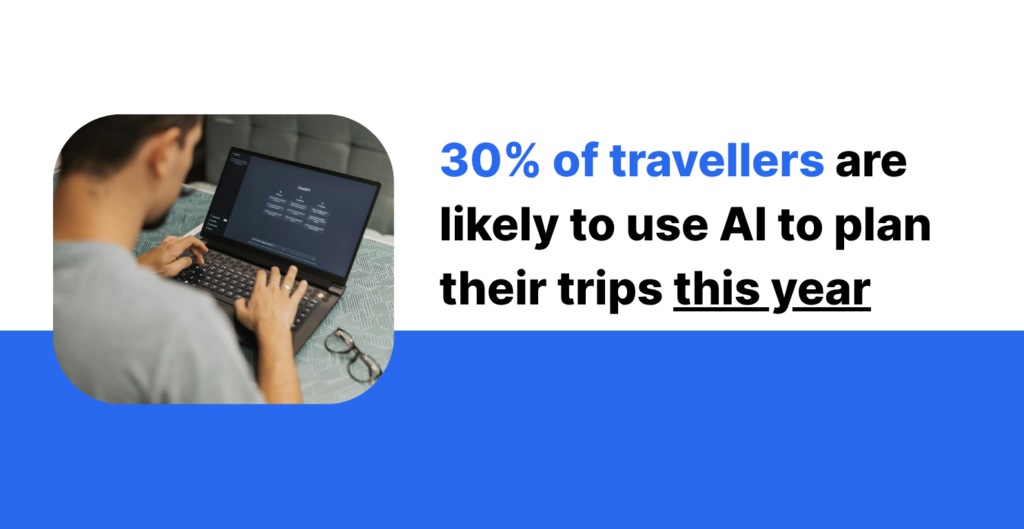
Travelers are also turning to AI for planning. A recent survey reported that 30% of travelers are likely to use AI to plan their trips this year.
For hotels, this is not just about reputation, it directly affects bookings, pricing power, and visibility at the earliest stage of the guest journey. In fact, our ROI of reputation management for hotels article explores how improving online reputation translates into measurable revenue growth.
Properties that optimize their digital presence for AI powered rankings have already shown gains in bookings, stronger Revenue Per Available Room (RevPAR), and improvements in operational efficiency, supported by industry case studies and academic research. The question is no longer if AI will influence visibility, but how hotels can adapt their strategy to be part of these recommendations.
There are practical steps that can strengthen a hotel’s position in AI powered recommendations. Many of them focus on refining what already exists online, making sure information is consistent, reputation signals are strong, and guest feedback is actively managed.
Keep your information consistent and up to date across Google Business Profile, OTAs, review platforms, and social media. Even small gaps or outdated details can weaken visibility.
Use clear descriptions and structured content so AI systems can easily understand what your hotel offers. FAQs for common guest questions and schema markup for essentials such as address, amenities, and pricing make your site easier for machines to read.
AI tools do not work exactly like search engines, but the same principles matter. Structured data, well organized content, review replies and fast, mobile friendly pages all improve how information is processed and trusted.
Mentions from credible sources carry weight. Publishing articles, collaborating with local tourism boards, or being featured in travel publications all help position your hotel as a reliable choice.
Encourage satisfied guests to share their experiences on platforms such as Google, Booking.com, TripAdvisor, and Expedia. A steady flow of fresh reviews strengthens trust for both travelers and AI systems.
AI also observes how management handles feedback. Timely and respectful replies to both positive and negative reviews send a clear signal of accountability. Use natural and conversational language
Travelers now phrase their searches in everyday terms. Descriptions such as “family friendly hotel in Valencia with pool” or “quiet rooms for remote work in Munich” help AI connect your property to real queries.
If reviews are one of the most influential factors in how hotels are perceived, both by guests and by AI, then how you respond to them becomes just as important as collecting them. As a reputation management and guest feedback insights platform, we see that responses are not only about customer service but also about signal-building. Every reply contributes to how algorithms and travelers interpret your brand.
Once your hotel is collecting consistent feedback, the next step is knowing how to respond in a way that both reassures guests and strengthens AI signals. Large language models don’t just register ratings, they learn from the language around your brand. The tone, context, and details within your replies can all shape your visibility in AI-driven recommendations.
Write replies in the same conversational style travelers use when searching online. Instead of generic thank-yous, mention specific experiences:
“We’re thrilled you enjoyed our rooftop view and proximity to Barcelona’s old town.”
These natural phrases reinforce the same context AI engines look for when recommending hotels for queries like “best hotels near Barcelona old town with great views.”
In positive reviews, echo the attributes you want AI, and travelers, to associate with your brand: “family-friendly,” “quiet rooms,” “eco-conscious,” or “business-ready.” Over time, these recurring terms build semantic links that strengthen your hotel’s identity in AI-driven discovery.
AI models (and guests) detect emotional tone. Replies that acknowledge issues and explain solutions convey accountability and transparency — two major trust indicators. For example:
“We’re sorry about the delay at check-in. Since then, we’ve adjusted staff scheduling to improve arrival times.”
Such context signals to AI systems that your hotel is responsive and service-oriented rather than passive or defensive.
Recency matters. Frequent, up-to-date replies show both travelers and AI crawlers that your property is active and your information current, a ranking signal shared across SEO and generative AI systems.
Ensure your tone and information align across Google, Booking.com, TripAdvisor, and Expedia. Inconsistent naming, descriptions, or messaging can confuse algorithms and weaken your perceived trust score.
AI can recognize mechanical or templated replies. Simple touches like addressing the guest by name, referencing details of their stay, or using a natural sign-off (“We hope to welcome you again soon”) make responses sound genuine — improving perceived quality both for humans and machines.
Responding thoughtfully to reviews does more than protect your reputation, it expands your digital footprint, one of the key factors that influence AI-driven visibility. Each authentic response adds fresh, meaningful language about your hotel online. This not only reinforces your identity to future guests but also helps large language models understand what makes your property trustworthy, relevant, and worth recommending.
Many of the steps that improve AI discoverability for hotels are closely tied to reputation management. Earning strong reviews, replying consistently, and using natural language are not only good for guests but also strengthen the signals AI tools rely on.
Customer Alliance collects reviews from major platforms such as Google, Booking.com, and Expedia, and centralizes them in a single dashboard. From there, hotel teams can respond directly with the help of AI Reply, ensuring faster responses in multiple languages while keeping the hotel’s own tone of voice. AI Insights highlights the topics guests mention most often, giving hotels a clearer picture of what defines their reputation online and how it is perceived across the web. By combining frequently mentioned topics with sentiment across sources, it also offers a snapshot of how a hotel might be perceived externally, including by AI systems.
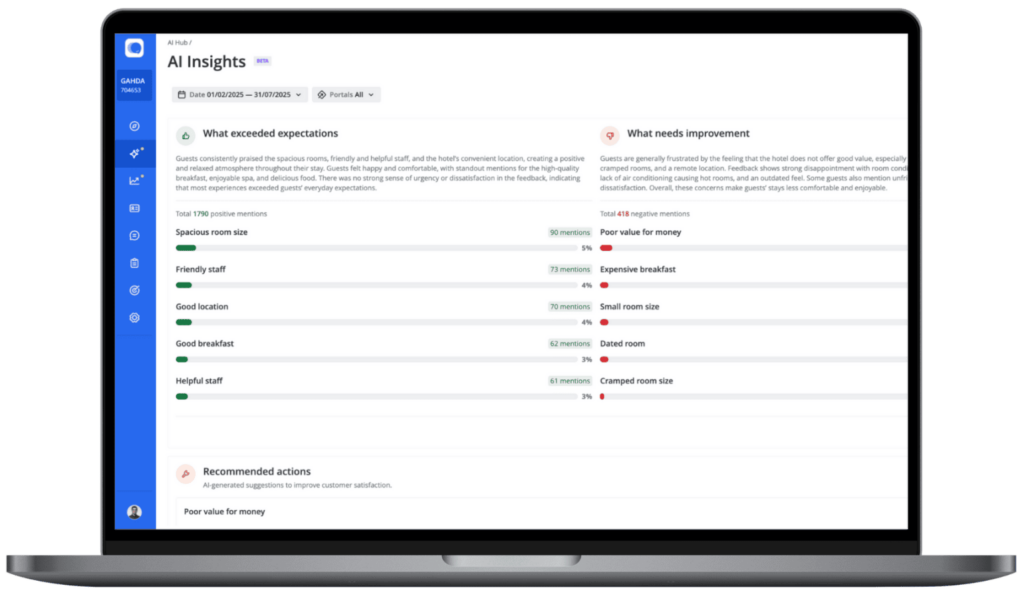
In a world where hotels are not only delivering experiences to guests but also being read and ranked by algorithms, this kind of clarity makes a real difference. Seeing both the guest experience from the inside and how it is reflected externally puts hotel teams in a stronger position to make the right decisions.
With surveys and data analysis added to the mix, Customer Alliance provides hotels with a reputation management system that not only builds guest trust but also supports visibility at a time when AI is reshaping travel choices.
Strong reputation management means happier guests, better visibility, and more bookings. Schedule a call with us and discover how Customer Alliance can support your hotel’s growth.
Scopri come le informazioni sull'intelligenza artificiale, i flussi di lavoro automatizzati e le dashboard unificate possono ridurre il lavoro manuale e aumentare la soddisfazione in tutto il tuo hotel.
richiedi una demo personalizzata


