
.png)



There’s no doubt that customer journeys are more complex than ever. But by putting yourself in your customers’ shoes, you can make great strides in both customer experience and business success.
The term 'customer journey touchpoints' refers to the various interactions a customer has with your business during their purchasing process. This process includes stages that remain constant, whether a customer is buying a physical or digital product, signing up for a service, or making a booking.
In this article, we'll unpack customer journey stages touchpoints, helping you to better understand how to effectively connect with and guide your customers every step of the way.
Here's what we'll be delving into. If you want to jump to a specific section, simply click on the corresponding link, and you'll be taken right there.
First things first. What do we really mean when we talk about the customer journey? The customer journey describes the customer’s path to making a purchase and beyond. Customer’s very rarely decide to buy on a whim. Instead, they work through a series of steps to become aware of, consider and evaluate their options before making a decision.
Understanding your customer journey is essential for any business. Why? By knowing their goals and expectations every step of the way, you can do a much better job empathising with your customers and perfectly positioning your product or service.
There are many different variations of the customer journey. However you’ll most commonly find it split into five main stages: Awareness, Consideration, Decision, Retention and Advocacy. Let’s take a closer look at each of them.

This is where someone first encounters your brand, usually when they are looking for a solution to some kind of problem.
For example, if someone wants to plan a trip to Paris, their first step will likely be to search online for hotels or apartments in the city. By clicking on things like booking portals, travel blogs and individual hotel websites, they become aware of different accommodation options.
What’s important to know is that at this stage the customer is not ready to make a decision. Rather, they are becoming familiar with what is available. Your goal here is simply to communicate what you have to offer.
To be discovered during this early phase, online visibility is key. Things like online reviews, blog posts, social media posts and optimising your website for SEO can all help you show up in search results.
This stage is where the customer begins to more seriously evaluate their options as opposed to casually browsing. They will be more specific about the features they are looking for in a product or service and will also begin to compare companies or products.
[ca-form id="194451" align="left" var1="http://www.customer-alliance.com/wp-content/uploads/2022/04/customer-alliance-article-guide-understanding-customer-journey-EN-download-1.pdf"]
Your goal here is to convince your target customers that your product or service can resolve their problem (ideally in a way that your competitors can’t). It’s a really important stage, because it’s one where you’re most likely to have your prospect’s full attention.
With that in mind, it’s a good point to really focus on providing the best possible customer experience. Think about content and interactions that will not only answer your prospects’ questions but also make sure they feel valued.
Not sure where to start? Getting feedback from your existing customers is a great way to get real-life insights and see where you can improve.
The stage we’ve all been waiting for! The customer has now done the bulk of their research and is ready to take the plunge. But don’t get too excited just yet! It’s still possible to lose your customer at this stage.
As a business, your role here is to make the purchasing process as easy and convenient as possible. This applies not only from a user experience perspective but also in terms of what you can offer your customer. Things like free demos, trial periods and introductory discounts can be enough to clinch the decision.
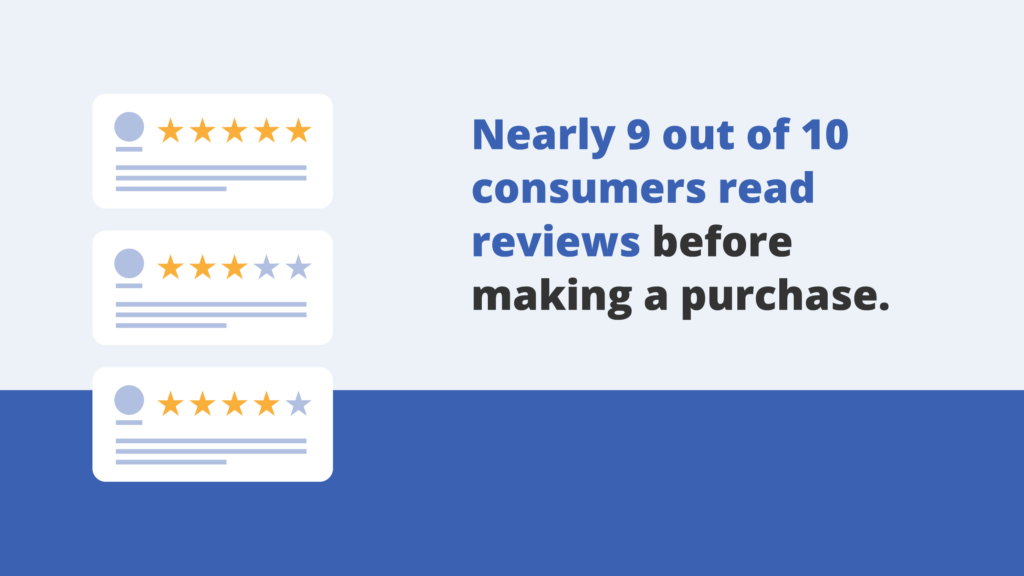
Another huge factor here is online reviews. Why? Nearly nine out of ten consumers read reviews before making a purchase (1). To make sure you are getting a steady stream of fresh opinions, a review management tool is the way to go. It will not only help to automate the process but will also provide you with valuable analysis that you can use to grow your business.
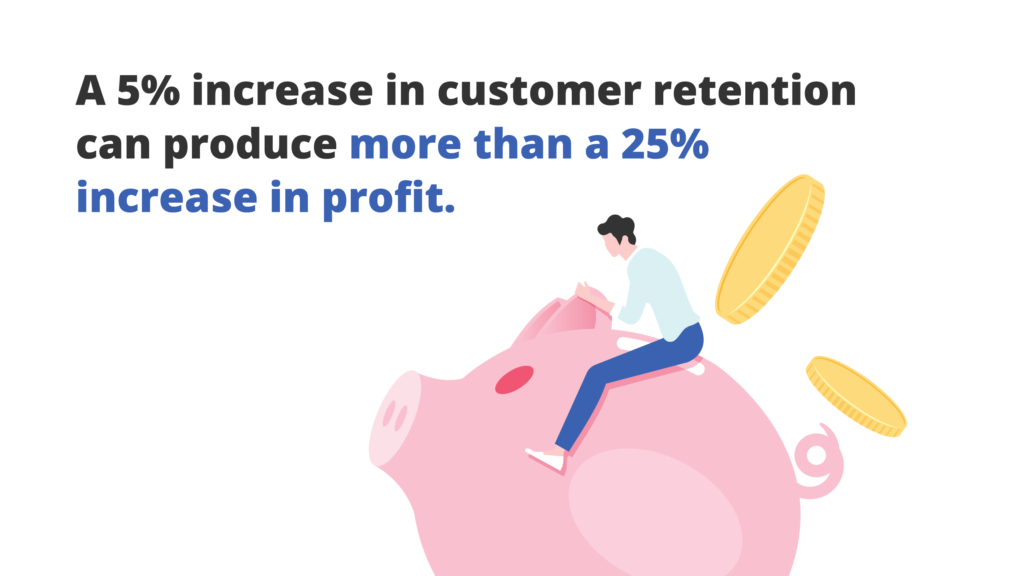
Remember, the customer journey does not finish as soon as they’ve made their purchase. Research shows that a 5% increase in customer retention can produce more than a 25% increase in profit (2). That’s why it’s essential to keep the contact going at this stage of the customer journey. But how?
Surveys are an essential part of the retention stage for any business. They are a fantastic way to get honest opinions from your customers and the insights you need to make sure they stick around.
Metrics like the Customer Effort Score (CES) or Net Promoter Score (NPS) are a great indicator of customer loyalty and are really easy to implement. If you want to read more about these and other key metrics, you can have a read of our handy article: How to measure customer satisfaction KPI: NPS, CSAT, CES, & CLI.
Just bear in mind that to see real change, you not only have to collect customer feedback but also act on it! Individual follow-ups to any issues that arise can go a long way in turning things around.
At this stage, keep the focus on strengthening the relationship with your customer and ensuring they have the best possible experience. Do that, and chances are they’ll keep coming back for more.
This is the stage where happy customers turn into brand advocates! They let others know about their experience by leaving online reviews and generate more business through word of mouth marketing.
The core concept at the advocacy stage is creating a community around your brand and making your customers feel appreciated. Of course, not every customer will reach this stage, but those that do are invaluable to your brand.
The advocacy stage should always include proactive ways of managing customer feedback. This means not just collecting customer feedback but also responding to it in a personal and timely way. In other words, show your customers that their opinions really matter!
Incentives are also key here. Personalised rewards, offers and referral programs are all great ways to encourage customers to spread the word.
It’s all well and good explaining the customer journey stages, but perhaps now you’re wondering how they really work in practice. Let’s have a look at one together!
Take the example we used earlier of someone who wants to plan a trip to Paris. Here is an example of how they may work their way through the customer journey stages.
When looking at the customer journey, you may also come across the phrase customer touchpoints. While the phrases sound similar, there is a key difference between the two that it’s important to understand.
Customer touchpoints are the individual interactions that someone has with your company during each customer journey stage. For example, in our hotel example, touchpoints might include:
Note that touchpoints can be both on and offline, so it’s important to think about both throughout the customer journey.
Understanding your customer journey touchpoints is crucial to shaping a top-notch customer experience. Picture touchpoints as the moments your customers interact with your business. These interactions mold their overall impression of your brand. So, knowing these touchpoints well enables you to spot and fix problem areas, and tailor your strategy.
Consider this: you run a bakery. When a customer visits your website, places an order, enters your shop, or shares their experience on social media - those are touchpoints. Your goal is to ensure all these interactions contribute to a standout customer experience.
By tracking these touchpoints, you can allocate resources effectively, knowing when to engage with customers and when to step back. Plus, understanding customer interactions throughout their journey helps you address weak spots, turning potential churn into conversions.
Mapping out your customer journey touchpoints is like putting together the pieces of a puzzle, revealing a complete picture of your customers' experience with your brand. Here's how to identify these critical points:
By identifying and understanding your customer journey touchpoints, you'll be well-equipped to optimise each interaction and create a better customer experience. Remember, the goal isn't to manage every single touchpoint, but rather to manage them in a way that they collectively deliver a satisfying and cohesive customer journey.
So, now you know the basics of customer journey stages and touchpoints. But what should you do with this information?
Customer journey mapping is an incredible tool for plotting your customer’s entire experience from A to B. It not only includes every stage but every individual touchpoint. Along with every interaction, a customer journey map also outlines any pain points your customers may encounter and details the emotions they feel along the way.
Visualising your customer journey has many benefits for your business. It allows you to:
Customer journey mapping helps make your customer experience management the best it can be. Look at it like this. The more you understand your customers, the more you can increase customer satisfaction. And the more happy customers you have, the more will reach the advocacy stage and introduce even more people to your brand. Cool, right?
If you’d like to learn more about customer journey mapping (including step-by-step instructions for getting started), head over to our article: How a Customer Journey Map Helps you Offer Unique Experiences.
Just like customers are all unique, so is the customer journey for any given company, from a small or medium sized business to an international enterprise brand. Though the five stages we’ve shared with you are the most common way to segment the journey, feel free to do so in a way that works for you! The main thing is that you have a solid understanding of your specific customer and the journey they go on with your brand.
By doing so, you’ll be better equipped to offer unrivalled customer satisfaction, boost your revenue and turn everyday customers into raving fans. Of course, mapping out your customer journey is easier when you have the right tool for the job.
Any good Voice of the Customer program should include a way to visualise the customer journey. At Customer Alliance, our customer journey feature gives you a holistic view of satisfaction every step of the way, plus smart analytics that enable you to compare data across individual touchpoints.
Want to find out more? Join us for a free introductory call and see what we can achieve together.
The customer journey is the path that a customer takes from the moment they first learn about your product or service until the point of purchase and beyond. This journey is usually split into five main stages: Awareness, Consideration, Decision, Retention, and Advocacy. Understanding this journey is essential because it helps businesses align their offerings with the customer's goals and expectations at every stage.
While customer journey stages represent the overall path a customer takes, customer touchpoints are the specific interactions a customer has with your brand at each stage. These interactions, both online and offline, can include visiting your website, following you on social media, receiving emails, engaging with customer service, etc. Touchpoints are crucial to understand as they shape a customer's impression of your brand and influence their experience.
Identifying your customer journey touchpoints involves considering the customer's perspective and listing every possible interaction they may have with your brand. Group these touchpoints by stage and collaborate with your team to ensure you've covered all potential interactions. Don't forget to ask your customers for feedback as well; their direct experiences can provide valuable insights you might have overlooked.
Customer journey mapping is a powerful tool for visualizing your customers' experience from discovery to advocacy. This process helps businesses understand customers' goals and expectations better, identify and eliminate pain points, streamline touchpoints, and increase accountability within the team. It aids in optimizing customer experience management and ultimately leads to increased customer satisfaction and advocacy.
Sources:
[hubspot portal="2001288" id="cbe89657-7dce-41a2-858a-a3efc3b58732" type="form"]
Descubra cómo la información de inteligencia artificial, los flujos de trabajo automatizados y los paneles unificados pueden reducir el trabajo manual y aumentar la satisfacción en todo su hotel.
obtenga una demostración personalizada


